Handyman in Keller, from Highland Oaks to Marshall Ridge
Most of Keller was built after 1980, and the city wants a permit before any tree comes down. Send the list with photos and one price comes back within 24 hours.
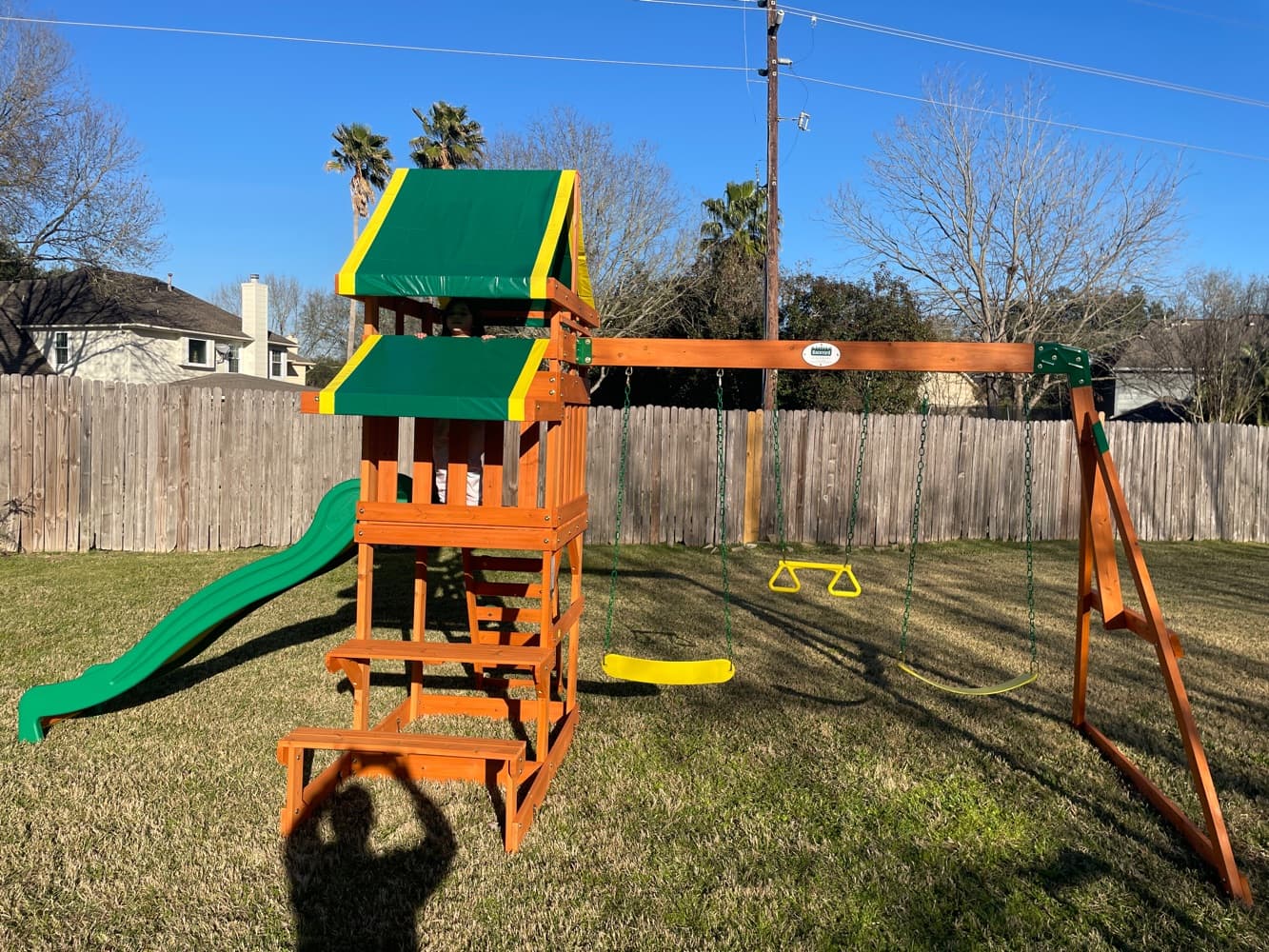
Handyman lists from Keller tend to split by the age of the house. The '80s and '90s houses need things fixed: a door that has started dragging on the carpet, a towel bar pulled out of the drywall for the second time. The newer ones mostly need things put up, like the TV over the family-room fireplace or a playset still in its boxes by the garage. Plenty of lists are half and half, which suits us fine; the handyman services page has the rest.
What are Keller's houses like?
Younger than you'd guess for a town with an Old Town. Half of them went up in 1999 or later, and 88% are detached single-family houses. Highland Oaks is the older end, mostly late '80s and '90s on quarter-acre lots with a lot of tree cover. Hidden Lakes was built in stages from 1996 to 2020, sixteen villages under one HOA, some behind gates. Marshall Ridge, on the north side along US 377, is mostly 2008 and later. And Old Town really is old, or parts of it are: bungalows, Craftsman houses, Foursquares and small ranches south of Johnson Road, with new houses on the empty lots between them.
Keller's tree permit comes before the gazebo
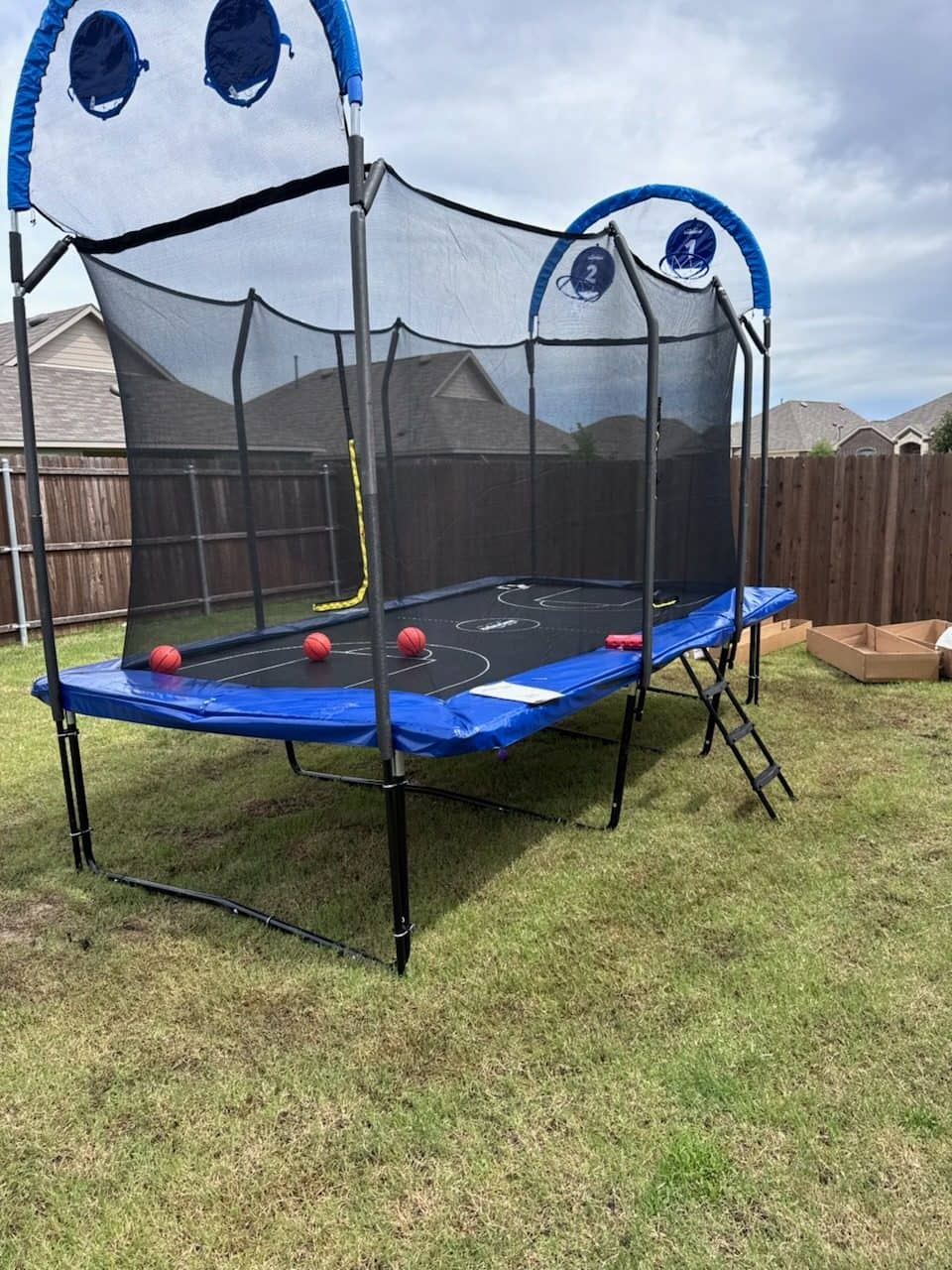
Keller wants a permit before any tree on your lot comes down, and it does mean any tree, the scrubby one by the back fence included. A gazebo or a trampoline wants the flat, open part of the yard, and in Highland Oaks that part sometimes has a young tree in the middle of it, so either the kit moves or you talk to the city first. We'll happily build beside a tree. The chainsaw belongs to someone else, and in Keller the paperwork comes before it anyway.
Don't put a trampoline under an oak unless you like sweeping acorns off the mat every fall.
How big can a shed be in Keller without a permit?
120 square feet, which is exactly a 10 by 12, and even then it has to sit 5 feet from every property line, stay out of easements and stop at 10 feet tall, so check the peak height on the box. Go bigger and you need the permit plus a longer list of rules: no more than two detached buildings, 10 feet apart, adding up to less than half the size of the house, never in front of it and never over 15 feet. The siding changes too. From 120 to 200 square feet it can be lightweight masonry or pre-finished wood, and over 200 it has to be brick, stone or whatever the house is made of. Past 400 square feet, or past 10 feet tall, an engineer designs the foundation and someone else pours it before we turn up.
Our advice for most Keller yards is the dull one. Stay at 120 square feet and 10 feet, and the only approval left is your HOA's, if you have one.
Gazebos, pergolas and playsets
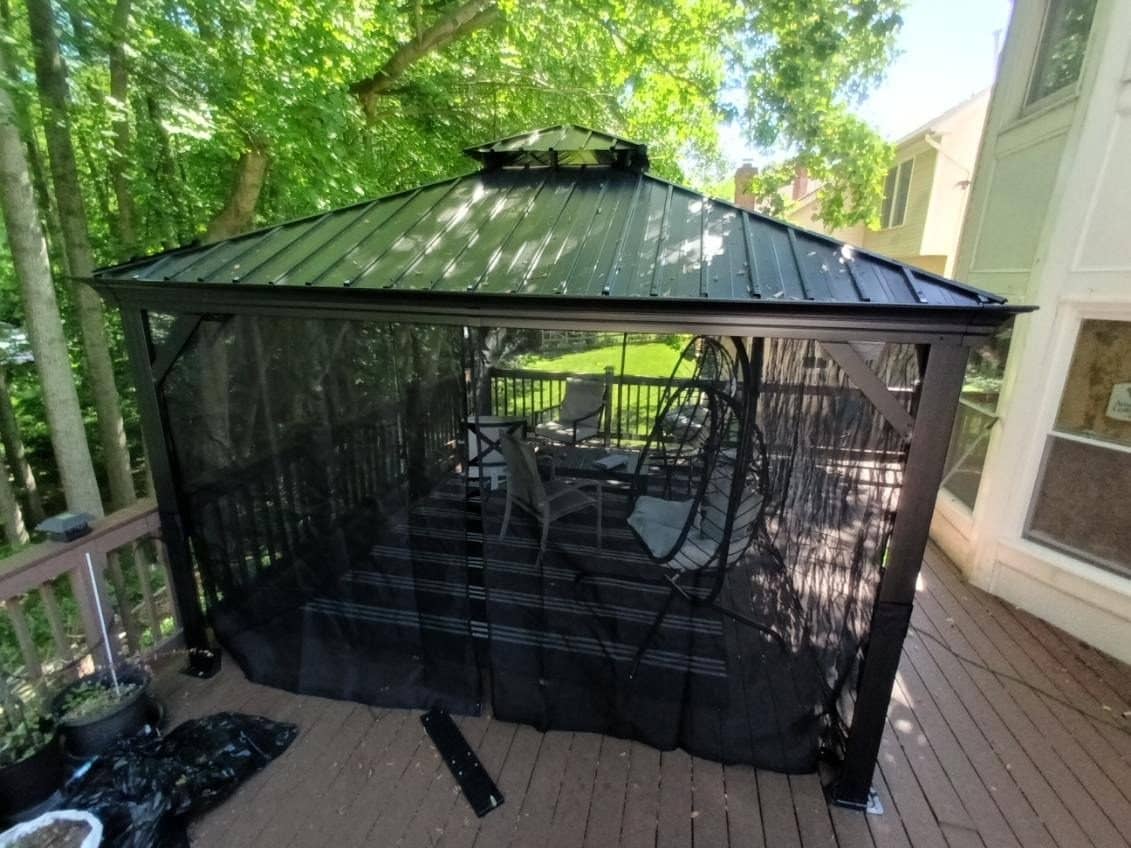
Pergolas are a gray area here. The city's permit list doesn't name them (it admits it isn't complete), and the code treats a trellised walkway standing apart from the house as an accessory building. We couldn't find a size below which a pergola is exempt, so call building inspections before you order one, not once it's on the patio in forty pieces.
A gazebo or pergola kit gets anchored into what's already there, a slab, a deck or pavers; footings and new slabs are a concrete crew's job. Playsets and trampolines are easier, needing only flat ground and a spot clear of low branches, which in some Keller yards is the hardest part to find.
What moves the price on a Keller job?
Mostly it's the job itself. The same TV on drywall in a Marshall Ridge living room and on the stone over a fireplace in Highland Oaks is two different jobs, and priced that way. After that it's the number of pieces, what the anchors go into, and how hard the spot is to reach: a second-floor game room, a narrow side gate, a gated village. On a 36,000-square-foot SF-36 lot, so does the carry from the driveway. If an HOA has to approve the work, that happens before we book.
So send the list with photos, the model number or a link for anything still boxed, and for outdoor kits one wide shot of the spot from the back door. You'll hear back within 24 hours with one price for all of it. Nothing's booked until you say yes, and if we find more on the day than the photos showed, we stop and ask before touching it.
Who comes to the door
It's usually one technician. A gazebo roof gets two, because nobody should be lifting one alone from a ladder. Every technician is background-checked and carries their own liability insurance. If something we did isn't right, a shelf that starts to lean or a door that's sticking again, call us and we'll send a different technician to finish it. Wiring we leave alone, even the small stuff: a fan in the new pergola is a licensed electrician's job, however short the run of wire.
Does Old Town Keller have extra rules?
For buildings, yes. The Old Town overlay runs from Johnson Road down to Bear Creek, with the Union Pacific tracks on the west, and it aims for the look of a small Texas town from the early and middle 1900s. Review goes through site plan approval: new buildings, a change of use, and additions costing a quarter or more of the house's appraised value. Sheds there also have to suit the house. A bright plastic shed behind a Craftsman bungalow is what that line is for.
Indoors, nothing changes; a TV goes up in Old Town like anywhere else.
Near Keller
Keller runs into Watauga on the south and Fort Worth on the west, and both have pages of their own. So does Argyle, a short drive up US 377 past Roanoke. Southlake and Colleyville are next door to the east, and we go to North Richland Hills and Haltom City too.
If the TV is going over a fireplace, the TV mounting page has more on brick and stone. And if your house is from the '80s, drywall repair is probably on your list already.
Yes. Put the gate instructions in your booking notes, or someone will be sitting at the entrance calling you. For anything outdoors, the architectural committee signs off first.
Then it needs a permit, and the siding rule above kicks in, so hold the kit's spec sheet up against it before you order.
No, that goes to an arborist, and if the tree turns out to need taking down, the city's permit comes first.
Stone takes masonry anchors, in the stone itself or the mortar joints depending on how solid it is. If you want an outlet up behind the TV, get a licensed electrician in before us; the other way round means taking the TV back down.
Not a barn; that's a builder's job. SF-36 is the only district where Keller allows exposed metal walls, and then only on barns. A shed kit for the same lot, sure.
Worth it, as long as they go on one list. A sticking door, two drywall patches and a loose handrail fit in one visit, with one price for the lot of them.
Work we do