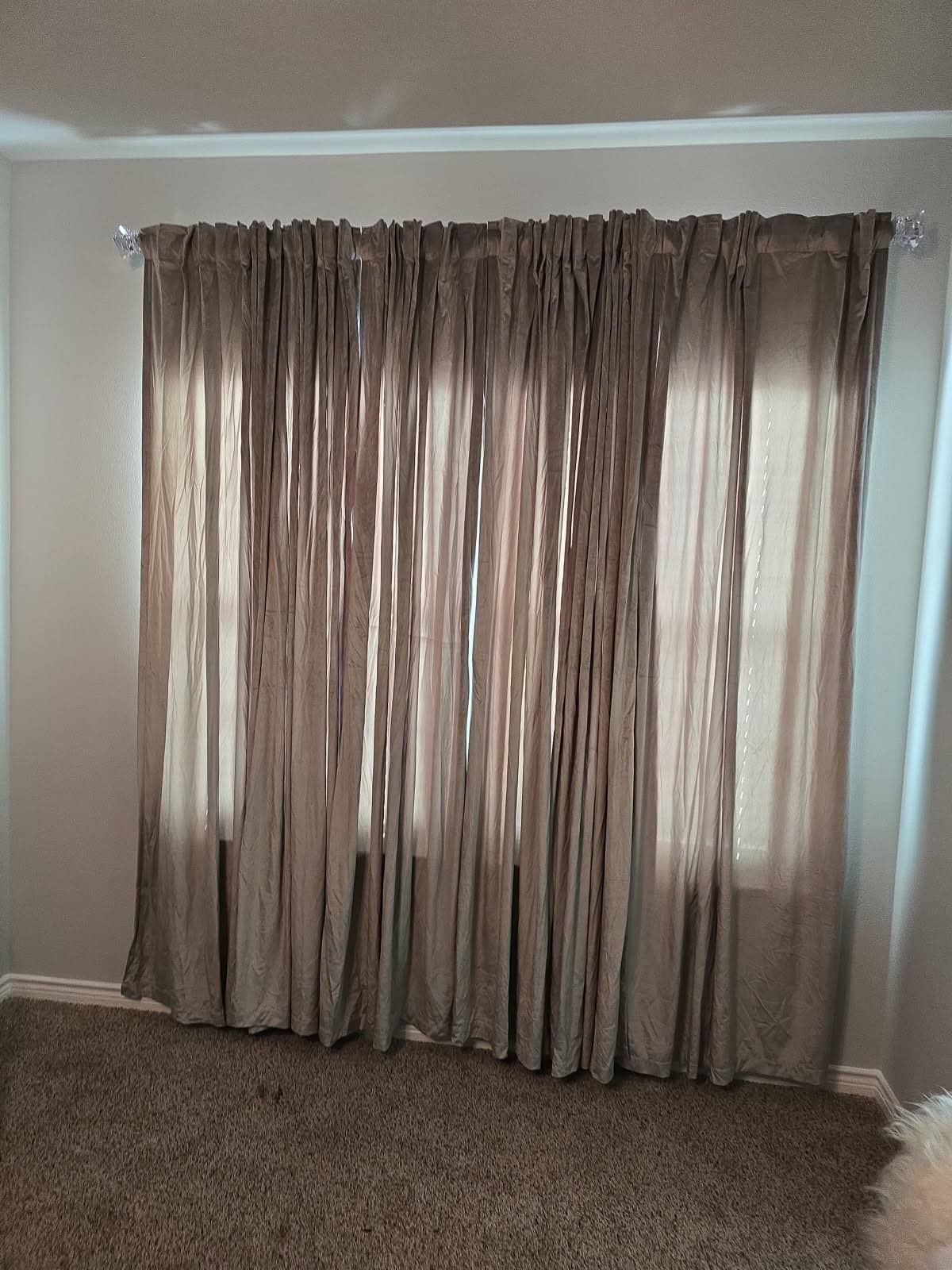
Handyman in Dallas, from Lakewood Tudors to Uptown towers
An M Streets plaster wall and an Uptown condo wall take different anchors, and a Swiss Avenue backyard needs a certificate before a gazebo goes in. One price for the list, inside 24 hours.
A handyman list in Dallas tends to pair an old house with a new purchase: a mirror for a hallway plastered in the 1920s, a TV for the den, a gazebo kit still strapped to its pallet in the driveway. It's all on our handyman services list. What changes across Dallas is the wall behind each job and, in a few neighborhoods, the paperwork in front of it.
How old is your corner of Dallas?
On the east side, old enough that a stud finder starts guessing. The M Streets are 1920s Tudors, plenty still with their arched doorways and original stained glass. In Lakewood, by White Rock Lake, one street can run from a Prairie four-square to an early ranch, much of it faced in Austin stone, with the odd new build where a smaller house came down.
The rest of the city is younger. Preston Hollow filled in from the 1930s on big estate lots, Lake Highlands mostly in the later 20th century, and Uptown is towers from the last few decades. Plaster and out-of-square rooms belong to the old neighborhoods.
Hanging pictures and mirrors on Dallas walls
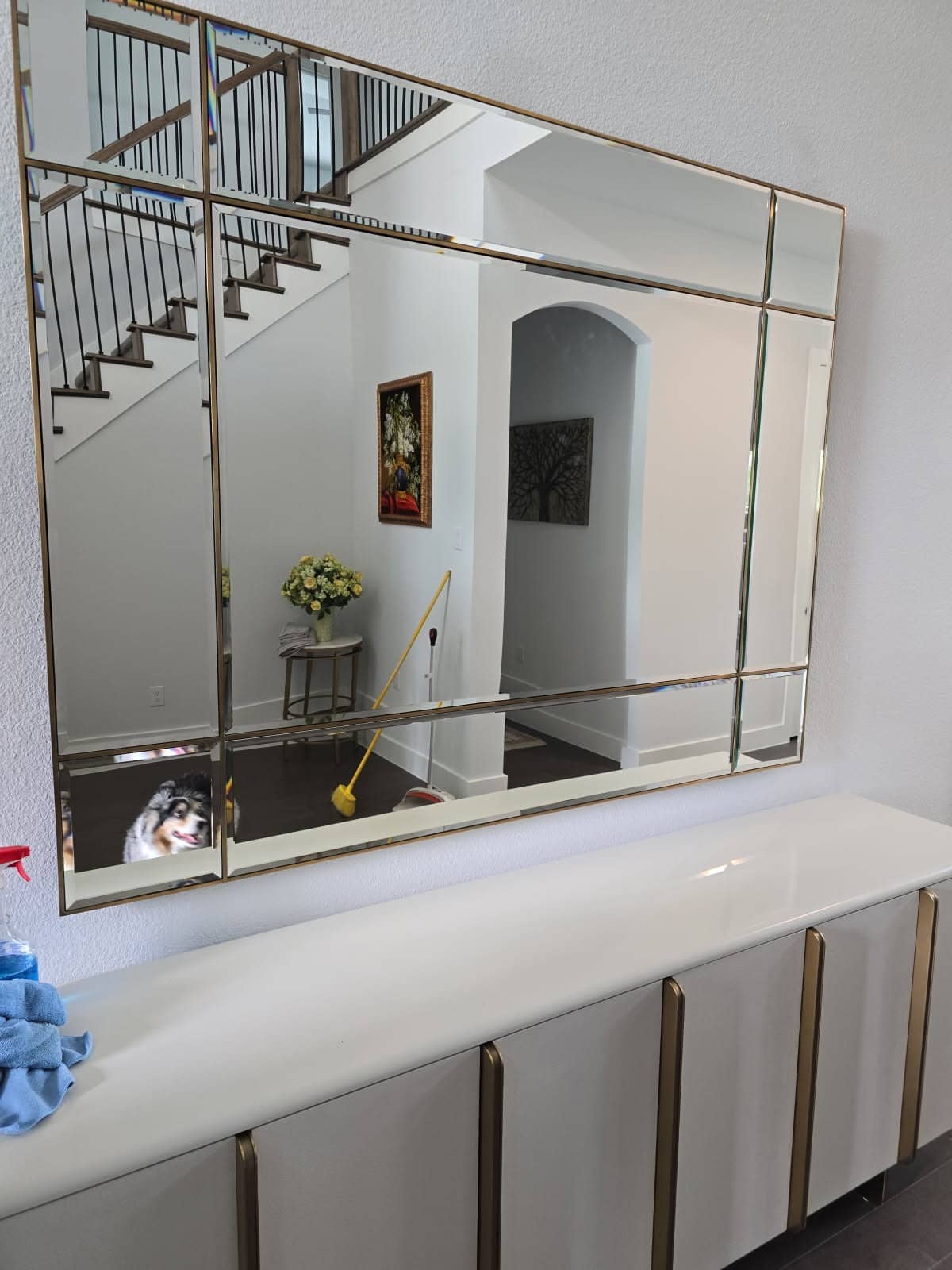
Plaster is why picture hanging in an older Dallas house takes longer than people expect. Drill it like drywall and a chunk of wall comes away with the bit. So the bit is sharp, the drill runs slow, painter's tape goes on first, and anything heavier than a small frame goes into the framing. If the room still has a picture rail near the ceiling, use it: hooks and wire, no holes at all.
Gallery walls start on paper. We trace each frame onto kraft paper, tape the sheets up, and you shuffle them until it looks right from the doorway, not from two feet away. Then the nails go through the paper marks. Slow going with a dozen frames, and the only method we've found that nobody regrets.
In an Uptown condo a steel stud won't hold a wood screw, so a heavy mirror hangs on toggles or a cleat. More on the picture hanging page.
Can a gazebo kit go up in Dallas without a permit?
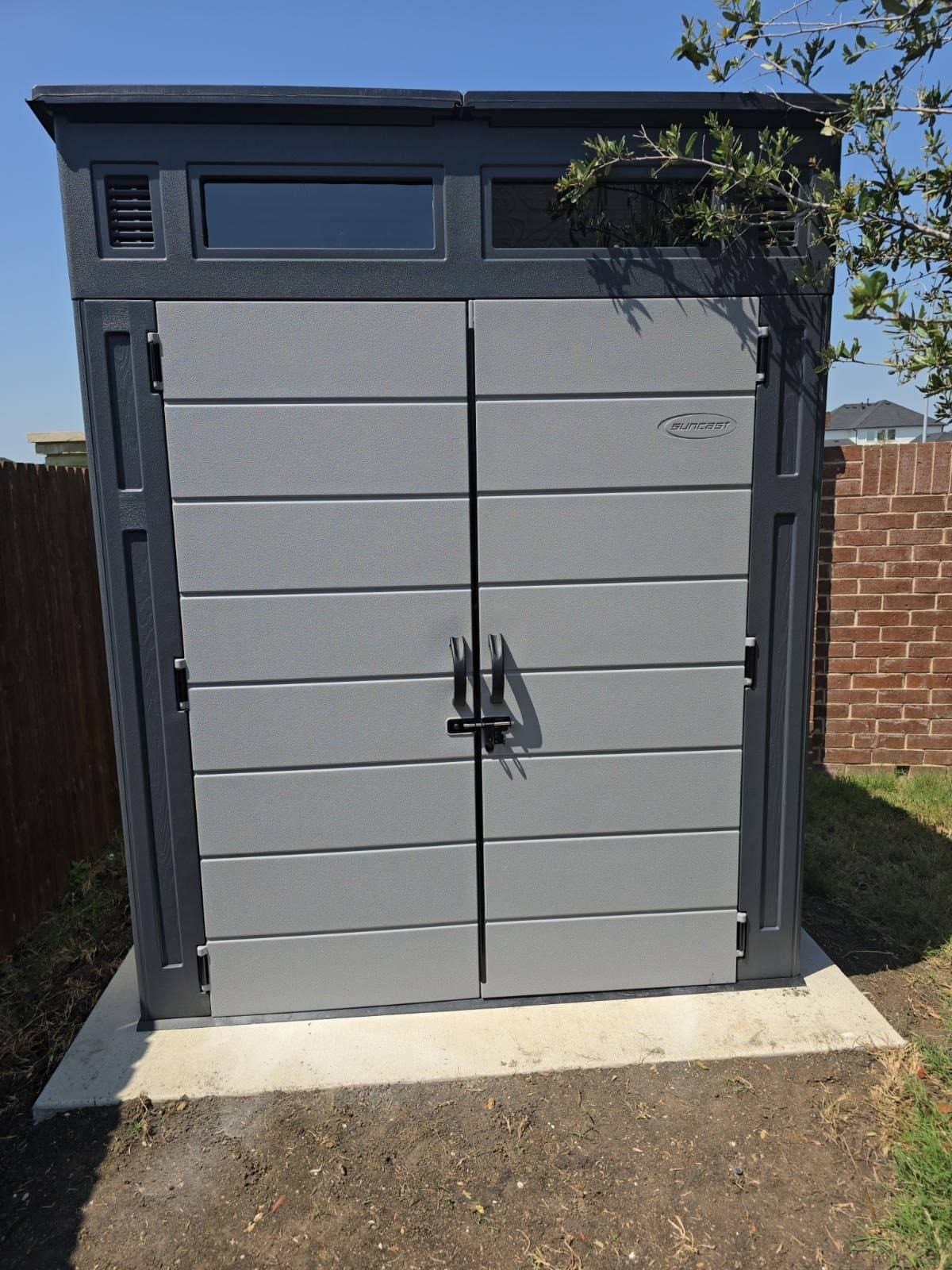
Maybe, for a small one. The code never uses the word, but Dallas's permit-free list includes a one-story detached shed or playhouse of up to 200 square feet on a house or duplex lot, and a detached patio cover of less than 200. Read closely, a 10 by 20 shed needs no permit and a 10 by 20 patio cover, at exactly 200, does.
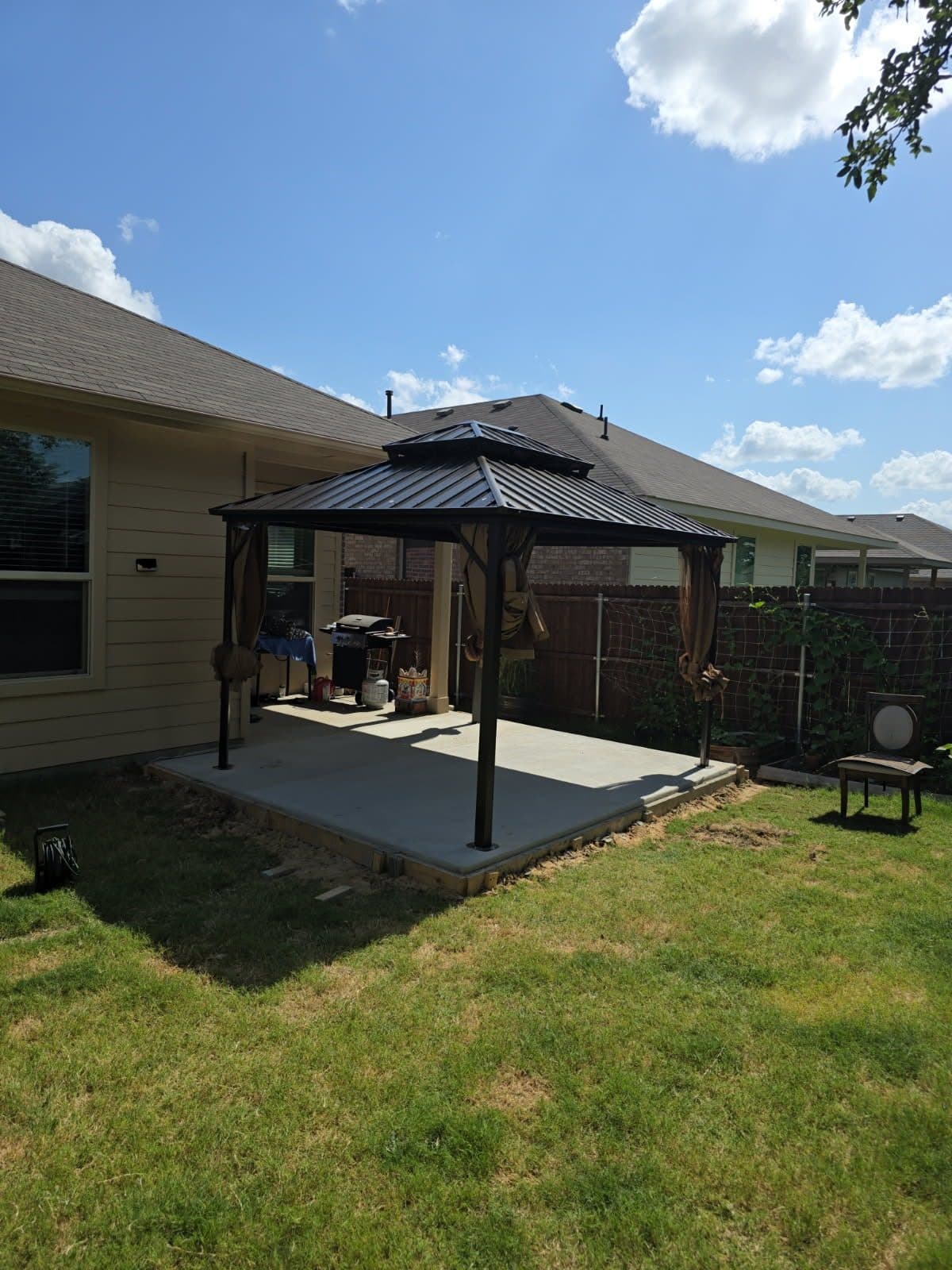
A freestanding hardtop gazebo is close kin to a patio cover. A 12 by 16 kit comes to 192 square feet; a 12 by 20 is 240, over the line whatever you call it. Attached to the house, it needs a permit regardless. Pergolas aren't named either, so ask the city how it reads your kit before ordering.
We assemble gazebo and pergola kits on the slab, deck or pavers already there and drill the post anchors into it; new footings are a concrete crew's work. Lake Highlands and Kessler Park are hilly for Dallas (street heights in Lake Highlands vary by about 50 feet), and every post wants level ground, so someone else levels a sloping spot first.
What a Dallas Landmark district changes
Outside the house, nearly everything. The city's historic overlay ordinance says no one may alter, place, construct, maintain or expand a structure in a Landmark district without a Certificate of Appropriateness. "Place" covers a gazebo kit. Even new gutters, which need no building permit, need a certificate here.
Staff can approve routine work within 20 days of a complete application: a like-for-like reroof, say, or gutters that match the trim. Cleaning counts as routine; sandblasting doesn't. The rest goes to the Landmark Commission, so outdoor work there waits for the certificate. Indoors, the ordinance doesn't reach a private house.
The districts include Swiss Avenue, the first (1973), Junius Heights, Winnetka Heights in Oak Cliff, and Munger Place, platted in 1905 and sold as the first deed-restricted neighborhood in Texas. Many Munger Place houses were cut into apartments after the Depression and put back together later, so a wall that looks original may not be.
Conservation districts are a lighter touch
Lakewood, the M Streets, Kessler Park and Vickery Place are among the conservation districts, each with architectural rules of its own. Exterior changes go to district staff on a Work Review Form, on top of any building permit rather than instead of one.
What makes one Dallas quote bigger than another?
The wall first, then the count. A TV on drywall over wood studs in Lake Highlands is quick. The same TV on M Streets plaster takes longer, and on an Austin stone chimney longer again. One mirror and a gallery wall of fourteen frames are different afternoons, and a gazebo kit prices by its box count and by whether it's anchored to a deck or a slab.
Access counts: a booked freight elevator in Uptown, or a long carry from the curb to the back of a Preston Hollow lot. So does any HOA approval or Landmark certificate the outdoor work is waiting on.
Send the list with a photo of each item, plus a model number or link for anything boxed. One price for everything on it comes back within 24 hours. Nothing goes on the calendar until you've said yes, and if a wall turns out worse than its photo, you hear about it and decide before anything extra happens.
The technician, and the jobs we pass on
One technician handles most lists; two come when a gazebo roof has to go up. Every technician is background-checked and carries their own liability insurance. You look the work over together before they pack up, and if something isn't right, whether you spot it then or after we've gone, another technician comes out to finish it.
Some of a Dallas list belongs to other trades. An outlet behind the TV or a fan in the gazebo goes to a licensed electrician, leaks and gas to a plumber, the big tree over the patio to an arborist. A length of 1920s trim that has to be milled to match is a carpenter's job, not ours. The quote says which is which.
Next door to Dallas
We also work in Richardson, Addison, Farmers Branch, Mesquite, Grand Prairie, Duncanville and DeSoto, and Irving, Garland and Carrollton have pages of their own. For an older house, TV mounting covers stone and brick chimneys, and drywall repair fixes the holes the last owner's shelves left.
Before you book
Send the list with photos, and for outdoor work in a Landmark or conservation district, say which one.
Call (469) 577-1791No. Swings and other playground equipment at a house or duplex are on the city's permit-free list. An HOA may still care where it goes, and in a Landmark district, ask preservation staff first.
Yes, into the framing behind it or on a cleat that spreads the weight. Not sure what you've got? Knock. Plaster sounds dead and solid, drywall sounds hollow.
Yes. Hand-laid stone is never flat, so the mount gets spacers until it hangs true. Cables run down the face in a painted cover, and any outlet behind the screen is an electrician's job.
No. Dallas surrounds them, but they're separate towns, each with its own permit office. We work in both.
We do. The building sets the terms: which elevator, where to park, what paperwork management wants first. Send its contractor rules with the list.
Nothing. The review is about the outside of the house.
Work we do