Picture hanging in Dallas, from 1920s plaster to Uptown concrete
A Junius Heights bungalow and a condo high up an Uptown tower take different drill bits. Send photos of the wall and the pieces, and the price comes back within 24 hours.
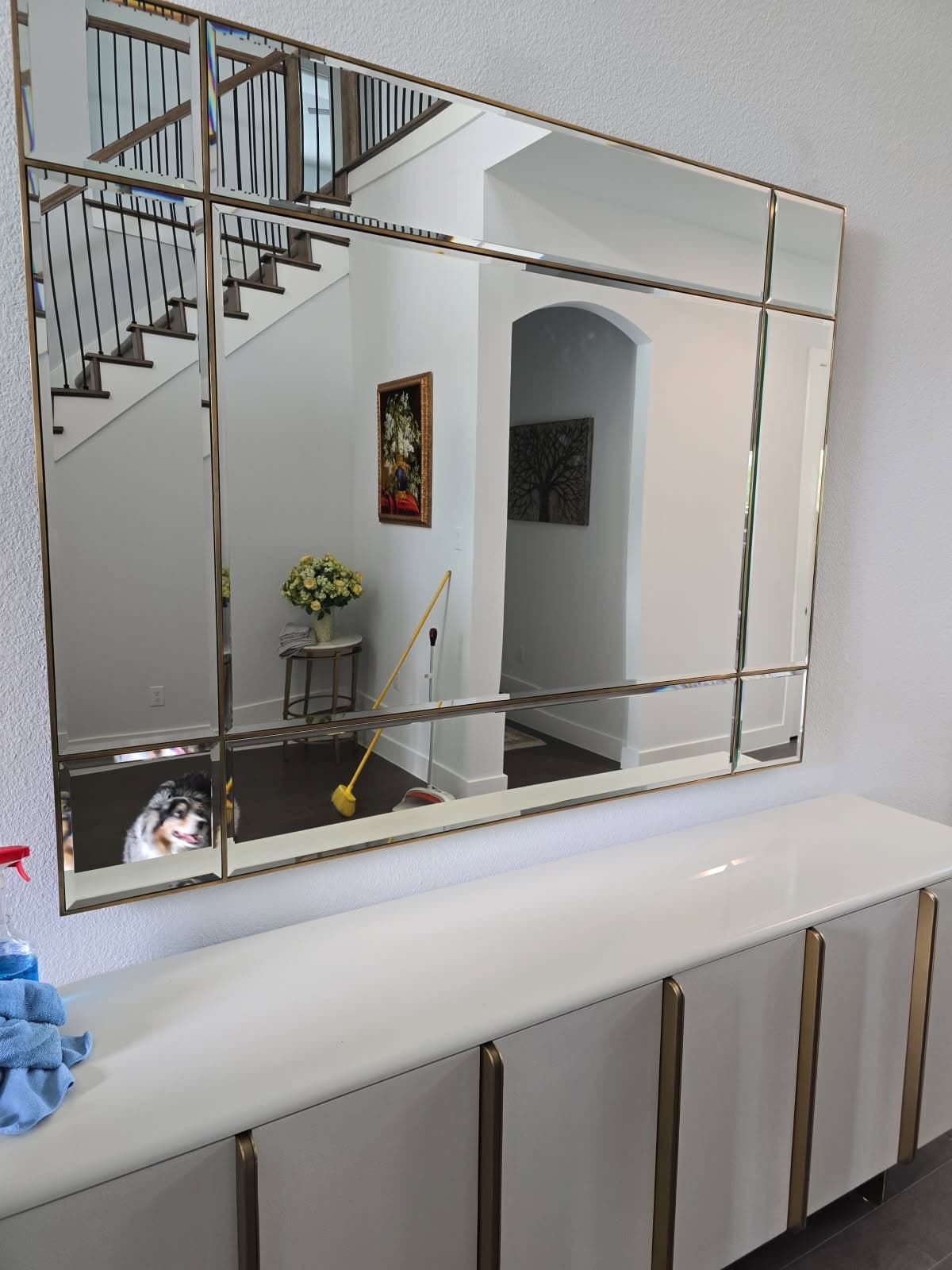
For LocalHandyPro, picture hanging in Dallas means art, mirrors, gallery walls and now and then a heavy clock. Some of it goes into houses old enough to have picture rails, some into towers with no wood in the walls at all. Send photos and we'll work out what's behind the paint before anyone picks up a drill.
What's behind the wall in a Dallas house
Depends which Dallas. East of downtown, and across the river in Oak Cliff, the old neighborhoods went up before drywall did. Swiss Avenue was mostly built out in the 1910s and '20s, around when the Tudors were going up along the M Streets, and Junius Heights kept adding bungalows into the '30s. Over in Oak Cliff, Winnetka Heights is four-squares and Prairie houses on streets laid out around 1910. Expect lath and plaster in all of them, the kind that weakens a Wi-Fi signal and cracks around a dull bit.
Lakewood has a lot of Austin stone. If yours is inside, on a fireplace say, a mirror can go on it, with a masonry bit and anchors set in the stone itself, because old mortar crumbles. Our honest view is that rough stone rarely needs a mirror. Art on the plaster beside it usually looks better.
Lake Highlands came later, mostly in the back half of the 20th century, so it's drywall on wood studs. Nothing to it, as walls go.
Mirrors that weigh more than they look
Quarter-inch mirror glass runs about 3 pounds a square foot before you count the frame. A 30 by 40 inch mirror over a sideboard is close to 30 pounds of glass, and a gilt one from an estate sale can be a good deal more. That's why so many of them spend a year leaning against the wall: nobody trusts the old wire on the back. We don't either.
A heavy mirror goes up on two points, a D-ring on each side into its own fixing, so it can't swing or tip when someone nudges it straight.
In plaster, finding the studs takes longer. An electronic stud finder gets confused by lath, so we run a magnet along the wall and let the lath nails show where the studs are.
Old rooms are rarely level
A laser level tells the truth, and in a 1920s room that can be the problem. As a house settles, the ceiling and the picture rail drift with it, and a row of frames hung dead level underneath can look crooked from the sofa. We hang to the laser, step back, and if the room disagrees we split the difference by an eighth of an inch or so. You get the final say.
A picture rail that's been painted a few times has a fat lip, and some hooks won't seat on it, so we bring more than one shape.
Up a four-square's staircase, the gallery wall runs parallel to the stair nosings and we ignore the ceiling entirely.
Hanging art in an Uptown condo
Uptown is thick with residential towers, most of them built late last century or this one. Inside a tower unit, partitions are usually metal studs. Walls between units and around columns are often poured concrete, and knocking doesn't always tell you which you've got. For concrete it's sleeve anchors and the hammer drill. That drill is loud, so if your building has quiet hours we book around them. Ask management before anything goes into a concrete ceiling, a ceiling-mounted curtain track for instance. Some slabs carry tensioned steel cables, and the building will want a say.
Where in Dallas we hang things
Kessler Park to Lake Highlands, and Highland Park and University Park too, which have their own city halls but hang pictures the same way. The Dallas page lists the other jobs we take on in the city. Outside Dallas proper we go to Irving on the west side, Carrollton and Plano up north, and Garland to the northeast.
What we pass to other trades
A picture light that needs power run to it goes to a licensed electrician. We'll hang the plug-in kind, and a TV for that wall is TV mounting, which fits in the same visit. One more: if a crack already runs halfway across the plaster, have a plasterer look at it before anything gets hung near it.
How booking works
Send the job
Send a photo of each piece and of the wall it's going on, with rough measurements, and say if your building has rules for contractors.
Get the price
We reply within 24 hours with one price for the whole list. Nothing is booked until you say yes.
Look it over with us
Before we pack up, you walk through the finished work with whoever did it.
Before you book
Photos of the wall and of each piece help most, with sizes (rough is fine) and, for mirrors, a weight if you know it. Something for scale in the shot is plenty.
Call (469) 577-1791Probably plaster, unless the room was redone. Push a thumbtack in somewhere it won't show, inside a closet say: drywall takes it, plaster bends it.
During the Depression a lot of Munger Place houses were carved into apartments, and most have since been restored. Walls added or rebuilt along the way are often drywall. It changes nothing for you. For us it means a small test hole in each room before the plan for a big mirror is settled, so say which rooms things are going in.
Better than any other wall in the unit. The catch is the hammer drill's noise, so it waits for whatever hours your building allows.
Stand on a bathroom scale holding it, then without it. Close enough.
Yes. Put them on the list.