Handyman in Fort Worth, from Fairmount porches to Heritage backyards
Bungalows from before 1920, brick ranches from the '60s, master-planned streets still filling in. Send photos of the list for one price within 24 hours.
A handyman in Fort Worth might spend the morning in a Fairmount bungalow past its hundredth birthday and the afternoon in Sendera Ranch, in a house so new the sod seams still show. Our handyman services don't change between them. The anchors do, and so does the city's interest in your backyard: Fort Worth wants a permit for every shed, and in its historic districts a certificate before any exterior work.
Fort Worth's houses, from the Southside to Alliance
Fairmount, on the near south side, is mostly one-story wood-frame bungalows from 1905 to 1920, with taller Four Squares among them, and Ryan Place next door was full of large houses by the mid-1920s. Arlington Heights, off Camp Bowie, is largely 1920s bungalows and Tudors.
The ranch houses came after the war. Westcliff, by TCU, is mostly 1950s to '70s under big oaks and pecans. Tanglewood's deed restrictions asked for brick or stone, and Wedgwood in the southwest is brick ranches too.
Then the far north. Heritage, near Alliance, opened in 2001. Sendera Ranch has been building since 2004 toward something like 9,000 homes. Both have HOAs.
Can old Fort Worth plaster hold a picture?
Yes, if you drill it instead of nailing it. Where a Fairmount or Arlington Heights bungalow still has its original plaster, it's hard and brittle over wooden lath, and a hammered nail can crack it. A slow pilot hole and an anchor made for plaster hold far better, and anything heavy goes into a stud.
A century of settling adds its own puzzle. The ceiling, the door trim and the spirit level can all disagree, so for a long gallery wall we put up a laser line, step back, and you choose between level and what looks level. People pick the second more often than you'd think.
In Heritage or Sendera Ranch it's drywall over studs, and the questions are about layout: where the gallery wall starts, how far apart the frames go, whether the mirror clears the light switch. In the brick ranches it's the fireplace wall, where a heavy mirror, or now and then a set of longhorn horns wider than the mantel, goes into the brick with a hammer drill.
One opinion, offered unasked: almost everyone's first pencil mark is too high. The picture hanging page covers mirrors, shelves and curtain rods as well.
Fort Worth wants a permit for every shed
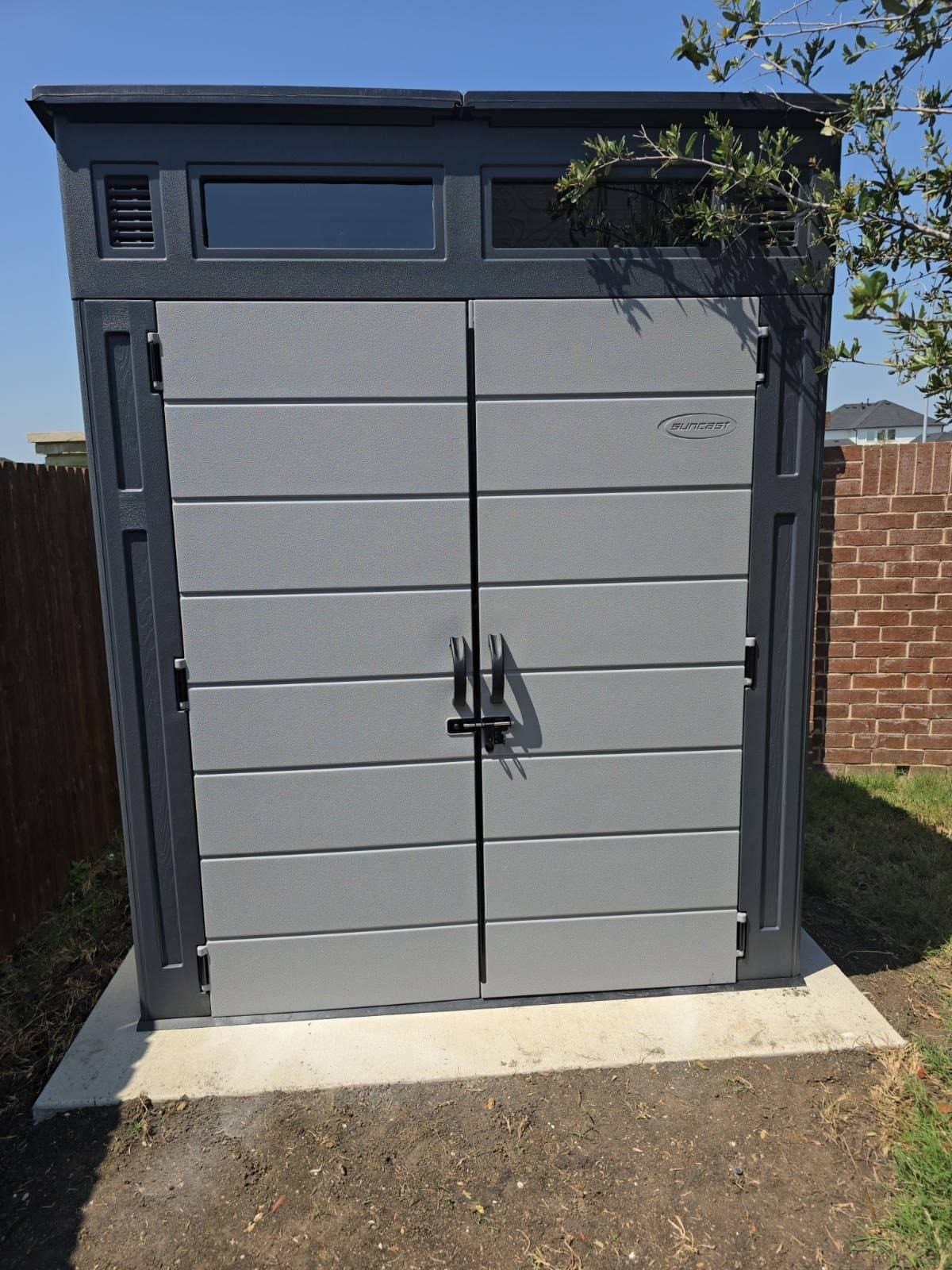
Every gazebo and patio cover too. The building code has no small-shed exemption, so a little resin shed for the mower needs a permit like a big one. Zoning then caps the combined size of the sheds and similar buildings on a lot, garages and carports aside: 120 square feet on a lot under 5,000 square feet, 200 up to 9,999, 400 up to an acre, and 2% of the lot beyond that. On a small lot one 10 by 12 uses it all, and the old shed in the corner counts.
A shed is one story, no taller than 10 feet or the house, anchored or on a foundation with skirting, and engineered if it's metal. It sits behind the back wall of the house or 75 feet from the front property line, never in a front yard or an easement.
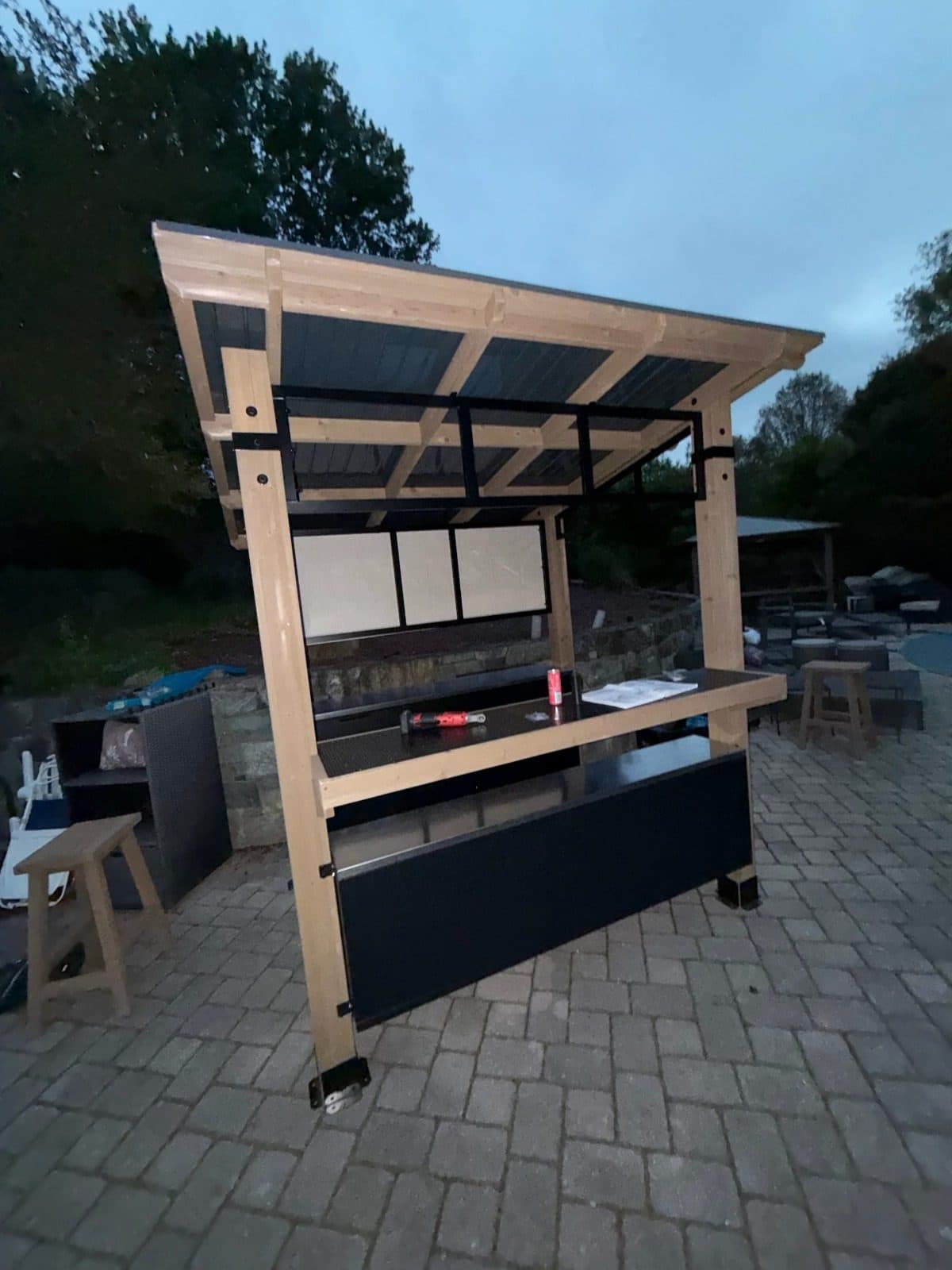
We put up gazebo and pergola kits once the permit is in hand, anchored into an existing slab, deck or pavers. Bare lawn needs a concrete crew's pad first.
Fairmount, Mistletoe Heights and the other historic districts
In all 14 of Fort Worth's local historic districts, Fairmount, Mistletoe Heights, Historic Carver Heights and the Stockyards among them, a Certificate of Appropriateness comes before any exterior work, repairs included, and before any building permit. It sounds heavier than it is: city staff approve most without a hearing.
Fairmount also has written standards, and some land on handyman lists. Original windows, doors and trim get repaired, not replaced. The front porch stays open, and its columns, railings and skirting are kept or matched. A pergola has to suit the house, worth remembering before an aluminum louvered kit gets ordered for a 1912 bungalow. The guidelines even suggest a mailbox in keeping with the house.
Indoors, none of this applies.
How a Fort Worth list becomes one price
From photos, one of each thing, with a link or model number for anything still boxed and a wide shot of the spot for outdoor work. Tell us the neighborhood too, which in Fort Worth says a lot about the walls.
Most of the price is the surface. Drywall on studs goes quickly, plaster and brick each take longer for their own reasons, and a gazebo anchored to pavers isn't the same job as one on a slab. After that it's how many pieces, fifteen gallery frames or three, and how far things travel: a dresser up a Four Square's stairs, a gazebo kit carried around a Westcliff house to the back. In Heritage and Sendera Ranch the HOA approves a backyard kit before we book.
Within 24 hours you get one price for the whole list, and nothing is booked until you say yes. If the wall behind the old mirror turns out worse than the photo, we stop and show you, and the extra waits for your decision.
On the day
Most jobs here get one technician; a gazebo roof or a dresser bound for a second floor gets two. Every technician is background-checked and carries their own liability insurance. You walk around the work together before they leave, and if something isn't right later, a curtain rod working loose in old plaster say, a different technician comes out and finishes it.
A porch fan or a new porch light is an electrician's job, and in Fairmount it has to go up without hiding or damaging the porch. Re-laying a porch floor in 3½-inch tongue and groove is a carpenter's, and the pecan over the back fence is an arborist's.
Fort Worth's neighbors
Arlington is next door to the east, and Keller and Watauga meet the city on the northeast; all three have their own pages. Keller lets a shed of 120 square feet or less go up without a permit, a line Fort Worth doesn't draw. We also go to Benbrook, Saginaw, Haltom City and Burleson.
Drywall repair covers the patches old walls collect, and TV mounting the brick fireplace.
Before you book
Send a photo of each item and tell us the neighborhood. In a historic district, mention anything on the list that's outside.
Call (469) 577-1791Yes, at any size, and the code has no exemption for pergolas or patio covers either.
No. Heritage is in the City of Fort Worth, so a shed needs a permit at any size. Sendera Ranch is less tidy: some addresses there say Haslet, and the rules follow the city the lot is actually in, which the tax statement shows.
Not for a patch. The city's permit brochure draws the line at replacing 16 square feet or more in one wall or ceiling. A doorknob hole is nowhere near; a whole sheet off a stained ceiling is over.
Yes, into the studs behind it, because plaster alone won't carry a mount. Finding them can take a probe hole or two, and we drill those where the mount will cover them.
Gladly, and repair is what Fairmount's standards ask for. It still counts as exterior work, so the certificate comes first. A sticking door inside the house needs nobody's approval.
No, playground equipment is exempt in Fort Worth. The shed for the bikes beside it isn't.
Work we do